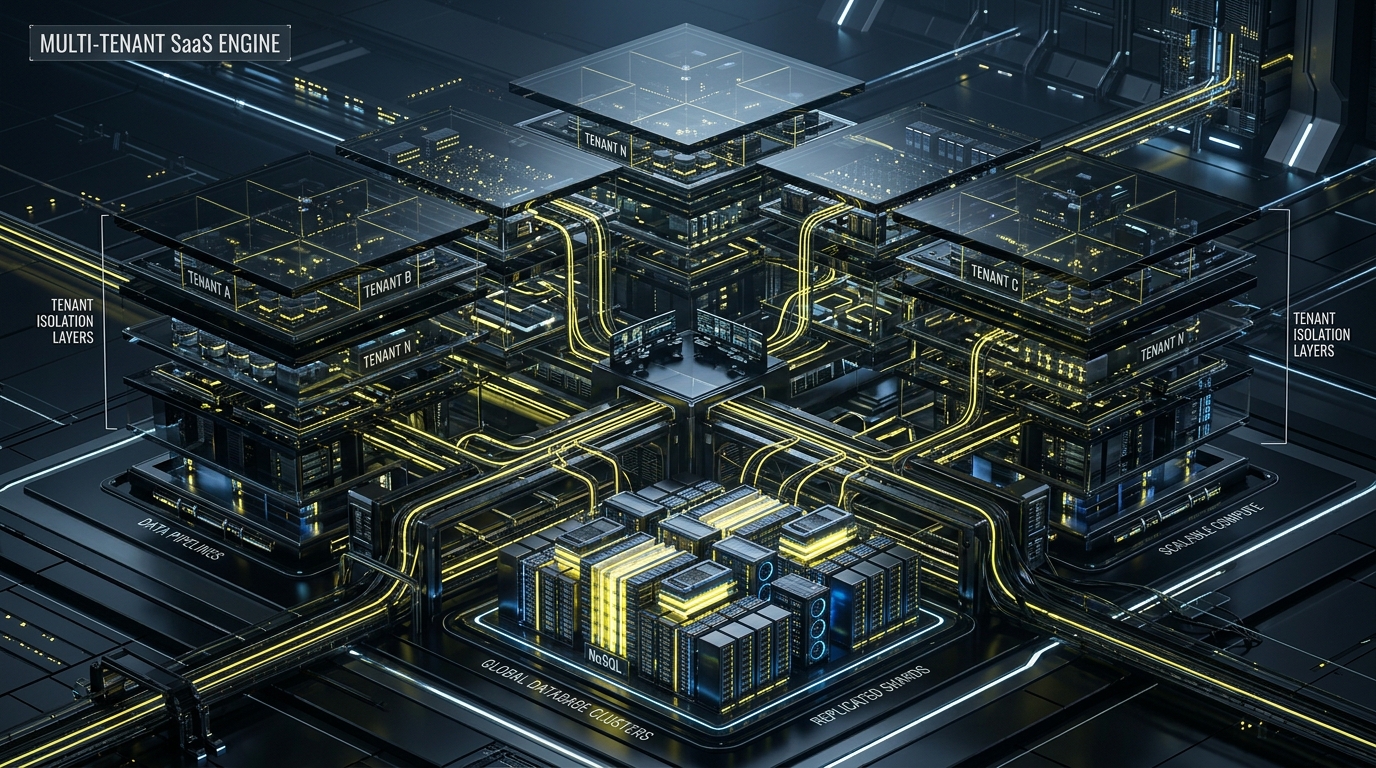
1. Multi-Tenant Data Isolation Strategies
Choosing the correct multi-tenancy model governs the longevity of any SaaS architecture. The three canonical tiers are:
1. Database-Per-Tenant
Maximum isolation and regulatory compliance. High infrastructure cost; maintenance scales linearly with tenant count.
2. Schema-Per-Tenant
Shared database instance with distinct database schemas. Strong boundary with reduced hardware footprint.
3. Shared Table (RLS)
Tenant ID column enforced via Oracle Virtual Private Database (VPD) or PostgreSQL Row-Level Security. Optimal density and cost.
3. 99.999% SLA Resiliency & Blue/Green Deployments
True enterprise multi-tenancy requires zero-downtime rolling upgrades. Database schema alterations follow the expand-contract pattern:
- Expand: Add nullable columns or new tables without altering existing contracts.
- Migrate: Dual-write data across legacy and target fields via background transactional workers.
- Contract: Gracefully deprecate old attributes once all microservice pods are running the new release.